Medical · Orthopedics

Partial Knee Replacement

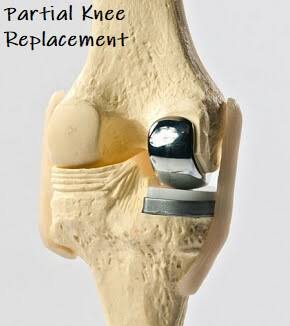
Partial Knee Replacement, also known as Unicompartmental Knee Replacement (UKR), is a surgical procedure that replaces only the damaged compartment of the knee with an artificial implant while preserving the healthy parts of the joint. It may help reduce pain and improve knee movement when arthritis

Also known as: Partial Knee Arthroplasty, UKR, Unicompartmental Knee Arthroplasty, Unicompartmental Knee Replacement, Unicondylar Knee Replacement

Packages0 bookable
WhatsApp Image 2026-07-22 at 12.24.17 PM.jpeg

Your guide

Understanding Partial Knee Replacement

Key points about the procedure. Expand a section only when you want more detail. Hospital packages below set stay lengths and prices.

Partial Knee Replacement (PKR), also known as Unicompartmental Knee Replacement (UKR), is a surgical procedure used when arthritis or other damage is mainly limited to one compartment of the knee.

The knee has three main compartments: the medial compartment on the inner side, the lateral compartment on the outer side, and the patellofemoral compartment between the kneecap and thighbone. In a partial knee replacement, the surgeon replaces only the damaged compartment rather than replacing the surfaces of the entire knee.

The most common reason for partial knee replacement is osteoarthritis affecting a single compartment of the knee, particularly the medial compartment. The damaged cartilage and underlying bone surfaces are removed and replaced with artificial components designed to restore a smoother joint surface.

Unlike a total knee replacement, the healthy compartments of the knee are preserved. Depending on the patient's anatomy and condition, important natural structures such as the remaining cartilage, ligaments and other healthy joint surfaces may be retained.

During surgery, the surgeon prepares the damaged area of the femur and tibia and places metal components with a medical-grade plastic bearing between them. The implant allows the treated part of the knee to move more smoothly while preserving the unaffected portions of the joint.

Partial knee replacement is generally considered when the damage is sufficiently localized and the remaining knee structures are suitable for the procedure. The surgeon evaluates symptoms, physical examination, X-rays or other imaging, ligament stability and the condition of the other knee compartments before deciding whether partial or total replacement is appropriate.

In some cases, the final decision between partial and total knee replacement may only be made after the surgeon directly assesses the condition of the joint during surgery.

The aim is not simply to replace a damaged portion of the knee but to reduce pain, preserve as much of the patient's natural knee as appropriate, and restore useful movement and function.

  1. Total Knee ReplacementMandatory

Travel & stay

Plan your medical trip

Trip length, fly-home notes, and documents for this procedure. Exact package stay is set by each hospital below.

Typical trip14–21 days
Min. stay in India14 days
Min. stay in hospital3 days

Flying home

When travel is usually safe after this procedure

Air travel after partial knee replacement requires individual clearance from the treating surgeon. Patients should not assume that a short hospital stay means they are immediately fit for international air travel. The main concerns after knee replacement include postoperative swelling, reduced mobility and increased risk of venous thromboembolism (DVT/PE).

For planning purposes, RogVeda should allow sufficient recovery time before the return journey. One NHS patient guideline for unicompartmental/partial knee replacement advises avoiding short-haul flights for 6 weeks and long-haul flights for 12 weeks after surgery because of DVT risk. For a Nigeria → India journey, the treating hospital should provide the patient's exact fit-to-fly/clearance date before the return ticket is finalized.

Before flying, the patient should have satisfactory wound healing, adequate mobility, controlled pain and no active complication requiring hospital treatment. The treating clinician should confirm whether additional measures such as compression stockings, anticoagulation or mobility precautions are required.

During any approved journey, follow the treating team's instructions, move the legs regularly where medically appropriate, maintain hydration and follow airline/medical-assistance requirements. Seek urgent medical attention for symptoms such as new or worsening calf swelling/pain, chest pain or sudden breathlessness.

Medical documents

What to prepare before you travel

  1. Recent orthopedic consultation / diagnosis reportMandatory
  2. Knee X-ray / imaging reports and imagesMandatory
  3. Previous medical/surgical historyMandatory
  4. Current medication listMandatory
  5. Allergy/medication allergy informationMandatory
  6. Recent blood investigation reportsStrongly recommended
  7. ECG / cardiac evaluation where clinically indicatedMandatory
  8. Diabetes / blood-pressure / other chronic-condition records, if applicableMandatory
  9. Previous physiotherapy/treatment recordsStrongly recommended
  10. Previous knee surgery records, if applicableStrongly recommended
  11. Treating physician referral / medical summaryStrongly recommended

NG → New Delhi

Visa and paperwork for the Nigeria → New Delhi corridor

Visa typeMedical Visa

Tests before you travel

  1. Orthopedic consultation / surgical plan confirmationMandatory
  2. Pre-operative medical clearanceMandatory
  3. Blood tests requested by treating hospitalMandatory
  4. Anesthesia assessment / clearanceStrongly recommended
  5. Medication reconciliationMandatory
  6. Imaging review by treating hospitalStrongly recommended
  7. Fitness-to-travel assessment before departureStrongly recommended
  8. Yellow fever vaccination certificateMandatory

Travel papers

  1. Valid passportMandatory
  2. Indian Medical Visa / e-Medical Visa, where eligibleMandatory
  3. Hospital appointment / admission letterStrongly recommended
  4. Return/onward flight bookingMandatory
  5. Yellow fever vaccination certificate, where applicableMandatory
  6. Travel/medical insurance documents, if purchasedMandatory
  7. Companion's passport and visa documentsMandatory
  8. Emergency/contact detailsMandatory
No live packages for this procedure yet. Check back soon or .

FAQ

Common questions

General answers about this procedure — not tied to one hospital package.